
Technology
テクノロジー
We develop next-generation therapeutics using the unique biological functions of extracellular vesicles (EVs), aiming for long-lasting and clinically meaningful treatments in respiratory medicine.
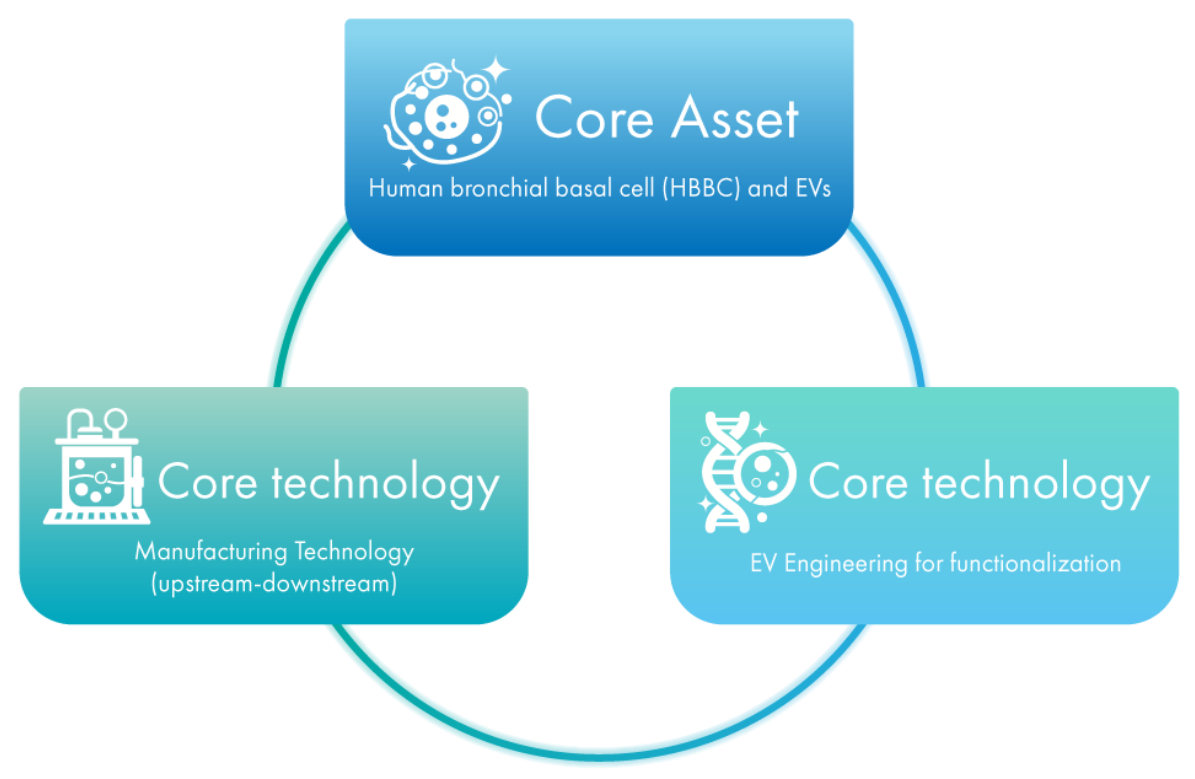
Core Asset
Human bronchial basal cell (HBBC) and EVs
Our proprietary Human Bronchial Basal Cells(HBBC) and their extracellular vesicles (EVs) possess the following unique characteristics:
HBBC-EVs exhibit desirable properties:
- Low immunogenicity (low MHC-I, high HLA-G)
- Anti-inflammatory profile (enriched miRNAs linked to inflammation resolution)
- Efficient pulmonary delivery (strong lung tropism)
Core technology 1
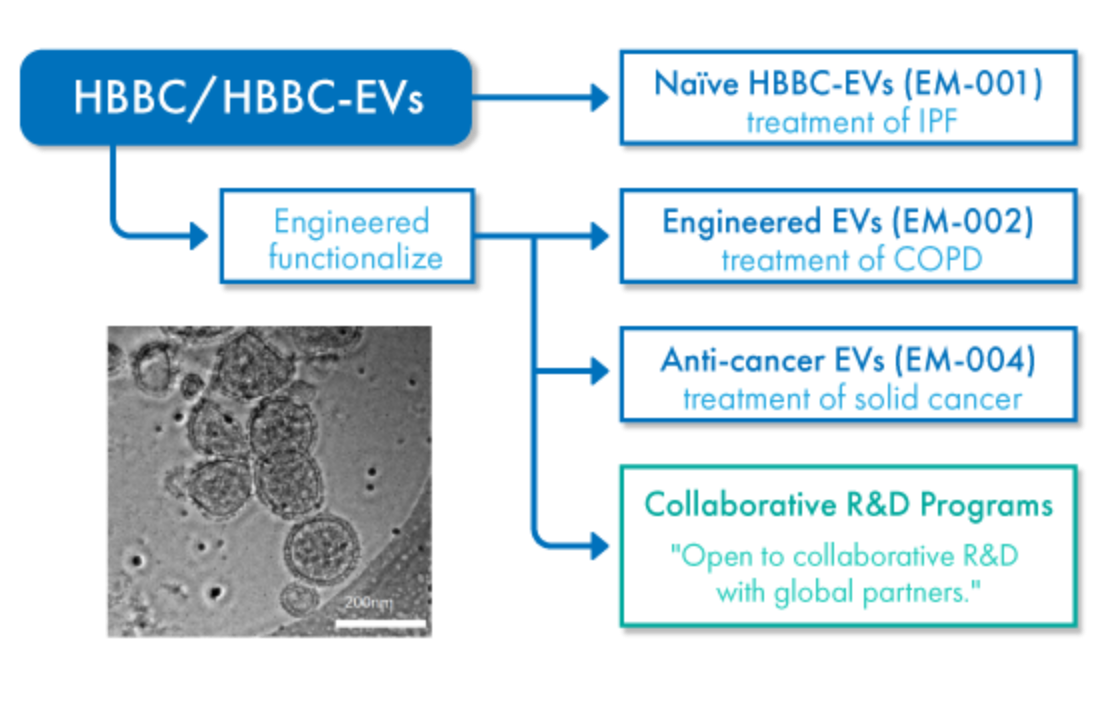
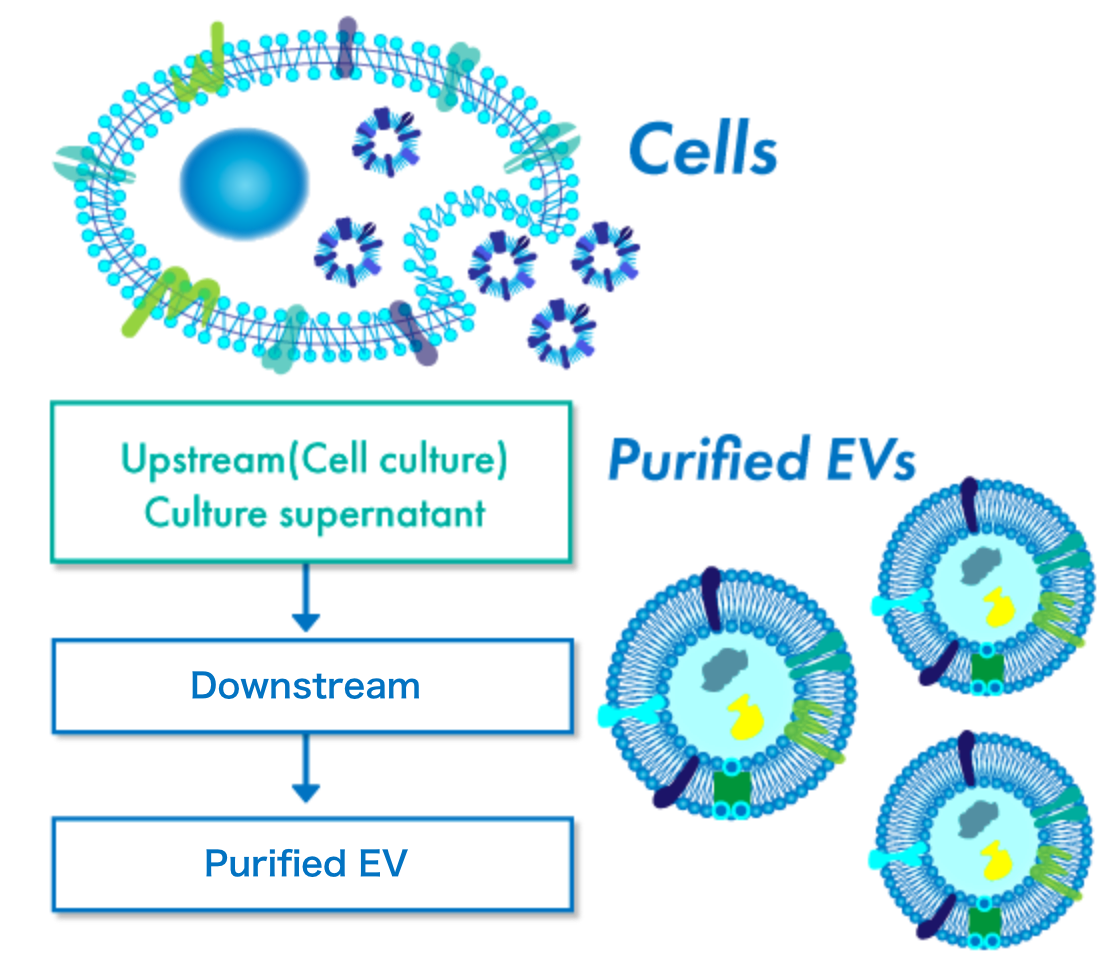
Manufacturing Technology(upstream-downstream)
The isolation and purification of extracellular vesicles (EVs) is still widely regarded as a major technical challenge in the industry. However, we have already overcome this hurdle by establishing a robust and scalable manufacturing process.
For our lead pipeline, EM-001, we have established a robust manufacturing process.
- Ultra-High Purity: Achieved EV purity levels exceeding 99%.
- Impurity Removal: Reduced host cell proteins and DNA to below detection limits.
- Scalability: Established a clinical-grade, scalable manufacturing process.
- Robustness: Confirmed consistent batch-to-batch reproducibility.
This integrated process enables the production of EV formulations with exceptionally high purity exceeding 99%.
Furthermore, we have completed formal consultations with the PMDA (Pharmaceuticals and Medical Devices Agency) regarding quality assurance through these manufacturing methods.
With regulatory alignment secured, we are well-positioned and steadily advancing toward clinical trials.
Core technology 2
EV Engineering for functionalization
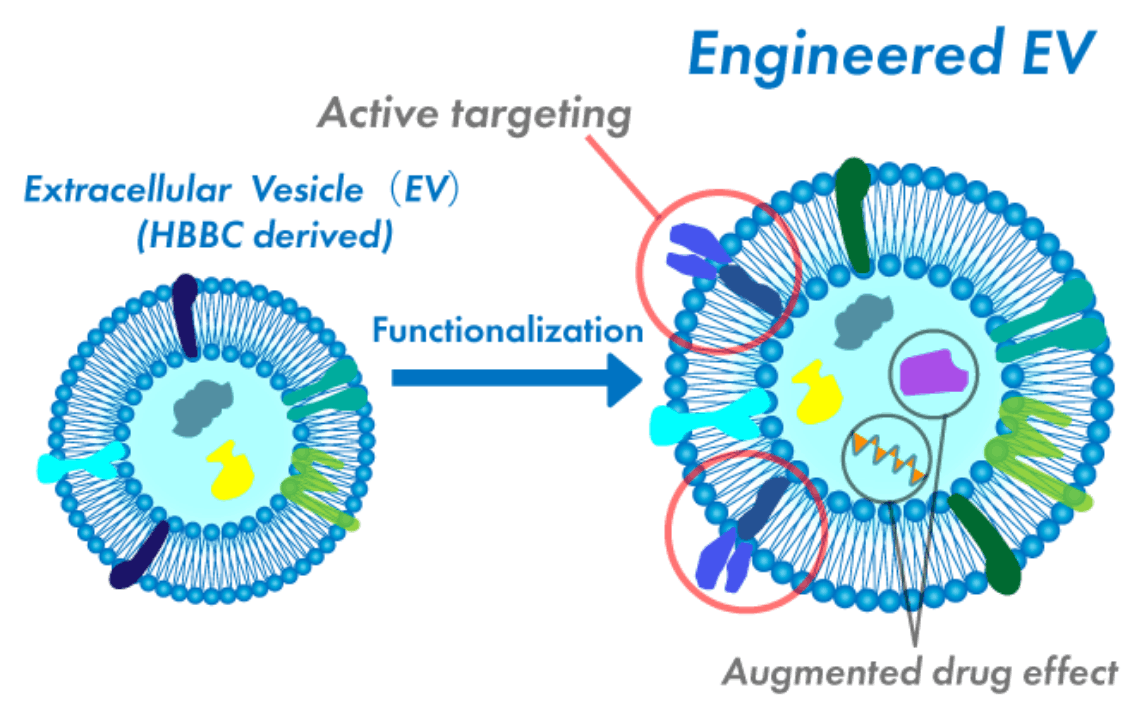
Targeted EV delivery is the next frontier in medicine. Although standard surface modification approaches have been tested, achieving optimal density for targeting ligands remains an industry-wide hurdle. We are implementing a proprietary design to overcome these limitations, significantly enhancing how functional molecules are presented on the EV surface.
Our approach focuses on the following key innovations:
-
Proprietary membrane engineering
Designed to significantly improve the surface display efficiency of targeting elements on EV membranes. -
Precision targeting development
We have successfully expressed functional moieties targeting specific antigens highly prevalent in solid tumors. -
Enhanced targeted delivery
By combining our proprietary EV surface technology with antigen recognition, our platform enables efficient delivery of therapeutic payloads to disease-relevant tissues.
This strategy leverages both the natural delivery capability of EVs and precise molecular targeting, enabling a powerful next-generation therapeutic platform.